
Prepare for A2L work
Establish ventilation, control ignition sources and use the required A2L-rated equipment before opening the circuit.

SINGLE COMPONENT • A2L
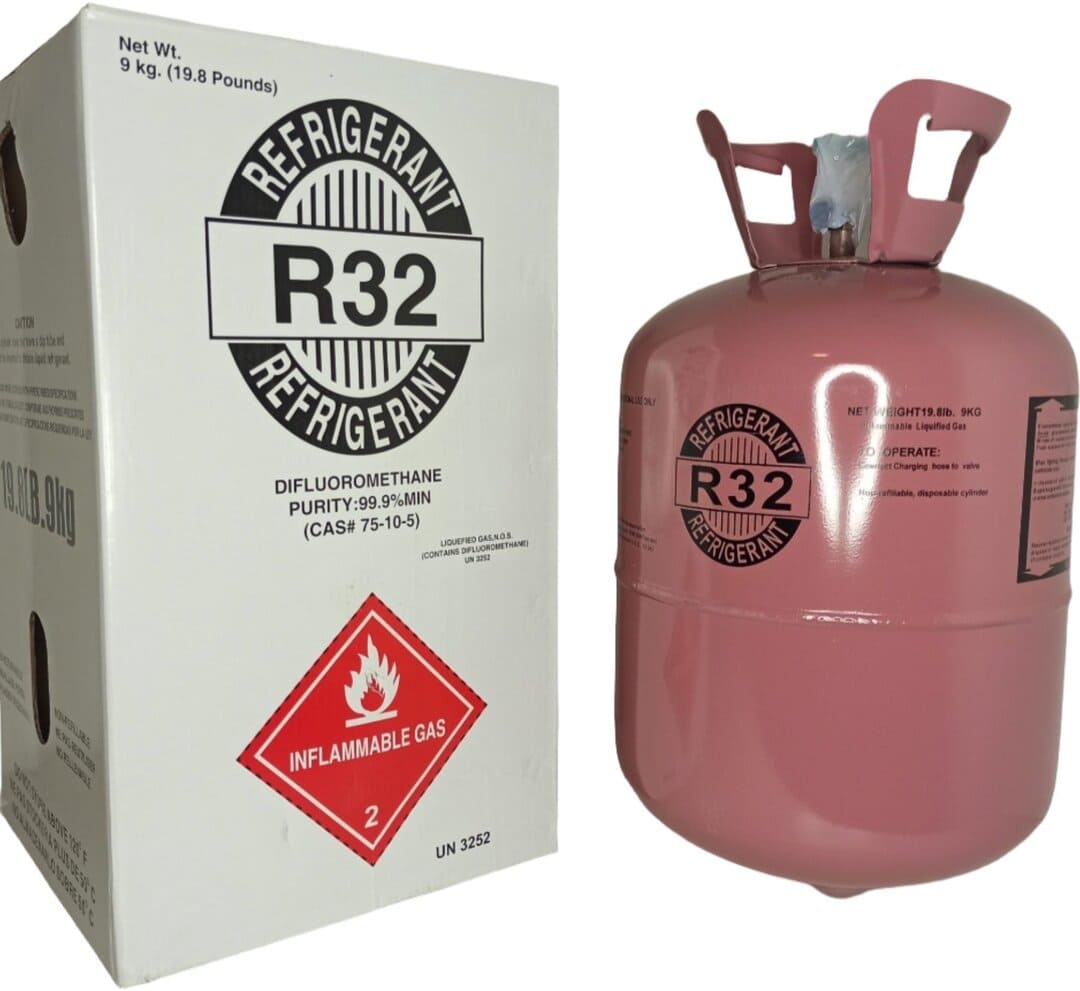
R32 is a single-component HFC used in compatible modern air-conditioning and heat-pump systems. The 20.9 lb cylinder supports professional service work on equipment specifically designed, labeled and installed for R32 and its A2L operating requirements.
Clear identification matters. Compare these details with the equipment nameplate, service documentation and cylinder label before connecting service tools.
| Refrigerant designation | R32 |
|---|---|
| Chemical name | Difluoromethane |
| Chemical formula | CH₂F₂ |
| Net refrigerant weight | 20.9 lb / 9.5 kg |
| Safety classification | A2L — lower flammability |
| Refrigerant family | Single-component HFC |
| Typical equipment | Compatible mini-split, split-system, heat-pump and light-commercial platforms |
| Intended user | Qualified A2L-trained HVAC/R professionals |
Establish ventilation, control ignition sources and use the required A2L-rated equipment before opening the circuit.
Prevent cross-contamination by keeping hoses, recovery cylinders and service equipment correctly identified.
Follow the equipment procedure and use an accurate scale to deliver the specified charge.
R32 must only be used in equipment designed and labeled for R32. It is not a field substitute for R410A, R454B or other refrigerants, even when R32 is one component of their blends. Never mix refrigerants.
Bulk refrigerant sales in the United States are restricted. Proof of the applicable Section 608 or Section 609 technician certification—or documentation that the purchaser employs a properly certified technician—may be required before fulfillment. The purchaser is responsible for satisfying federal, state and local rules for purchase, transport, storage and use.
Store the cylinder upright in a cool, dry, well-ventilated area away from heat, sparks, flames and direct sunlight. Follow A2L storage limits, the cylinder label and the current safety data sheet. Refrigerant can displace oxygen, cause cold burns and create dangerous pressure if mishandled. Never intentionally vent refrigerant.

