
Identify before connecting
Use refrigerant identification when system history is uncertain. Mixed or contaminated refrigerant requires proper recovery and disposition.

LEGACY SYSTEM SERVICE • A1
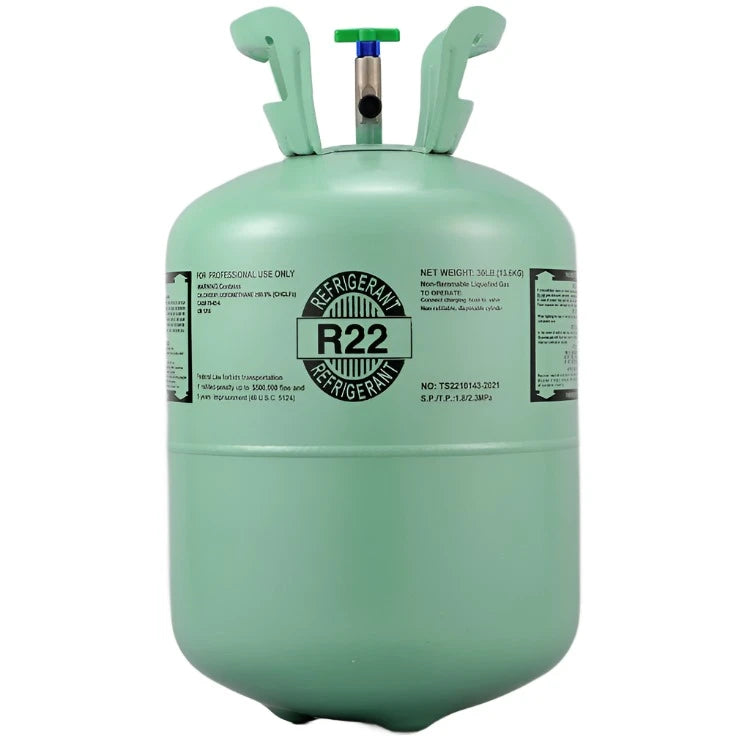
R22 is an HCFC refrigerant found in many older air-conditioning and refrigeration systems. This 30 lb cylinder is intended for lawful professional service of compatible existing equipment—not for charging new equipment or mixing into systems designed for another refrigerant.
Clear identification matters. Compare these details with the equipment nameplate, service documentation and cylinder label before connecting service tools.
| Refrigerant designation | R22 |
|---|---|
| Chemical name | Chlorodifluoromethane |
| Chemical formula | CHClF₂ |
| Net refrigerant weight | 30 lb / 13.6 kg |
| Safety classification | A1 — lower toxicity, no flame propagation |
| Typical equipment | Compatible legacy air-conditioning and refrigeration systems |
| Environmental class | Ozone-depleting HCFC; regulated service use |
| Intended user | Properly certified HVAC/R professionals |
Use refrigerant identification when system history is uncertain. Mixed or contaminated refrigerant requires proper recovery and disposition.
Recover refrigerant with approved equipment and follow all recordkeeping, handling and disposal requirements.
Confirm oil condition, compressor health, metering device operation and leak integrity before adding charge.
Use only in existing equipment labeled for R22. Do not mix with retrofit blends or use in R410A, R407C, R32, R454B or other systems. R22 production and import for new supply have been phased out in the United States, so service decisions should account for long-term availability and system age.
Bulk refrigerant sales in the United States are restricted. Proof of the applicable Section 608 or Section 609 technician certification—or documentation that the purchaser employs a properly certified technician—may be required before fulfillment. The purchaser is responsible for satisfying federal, state and local rules for purchase, transport, storage and use.
Keep upright, capped and secured in a cool, dry, ventilated area. Protect from high heat and physical damage. Review the product label and safety data sheet before use. Refrigerant can displace oxygen, cause cold burns and create dangerous pressure if mishandled. Never intentionally vent refrigerant.

